
Modern katana blades rely on carefully chosen carbon steels, and 1060 steel alone is estimated to dominate production with typical hardness around 58–60 HRC, which already tells us how much steel choice shapes performance, durability, and price. In this guide we explain, from our perspective as a katana maker and retailer, how the main carbon steel types used in katana blades compare, and we show concrete examples from our own collection so you can decide what fits your training, display, or collection goals.
Key Takeaways
| Question | Answer |
| What is the best carbon steel type for a katana beginner? | For most beginners, a spring steel or medium‑carbon blade offers a forgiving mix of toughness and easy maintenance, similar to our spring‑steel examples like the Peacock Katana on our katana collection page. |
| Is T10 really better than regular high‑carbon steels? | T10 tool steel pushes hardness and edge retention slightly higher than many standard carbon steels, which is why we use it in premium blades such as the T10 version of our Peacock Katana. |
| What does spring steel mean on a katana blade? | Spring steel is a tough high‑carbon alloy designed to flex and return to shape, which you can see used on models like Aozora no Shishi that balance durability with traditional aesthetics. |
| Are manganese‑steel katanas durable? | Yes, manganese steel blades, like our Kaze no Shogun, are engineered for impact resistance and structural toughness, which suits heavy practice and display in bold finishes. |
| Is Damascus steel stronger than plain carbon steel? | Modern Damascus‑patterned blades focus more on visual patterning over an underlying carbon steel, as seen in pieces like the Dragonscale Shogun Wakizashi, so strength depends on the base steel and heat treatment rather than the pattern alone. |
| What should I prioritize if I want a functional cutter? | Look for a tough carbon or spring steel, proper heat treatment, and practical features like BO‑HI or no BO‑HI depending on your cutting style, then match it to your budget on our main KatanaLand storefront. |
Understanding Carbon Steel In Katana Blades
Carbon steel is simply iron with carbon added, but minor changes in carbon content can radically change how a katana behaves in your hands. At roughly 0.45 percent carbon, 1045 steel makes a softer, more forgiving edge, while around 0.95 percent carbon in 1095 or T10 yields a much harder, sharper and more maintenance‑intensive blade. For katana use, hardness is usually expressed in HRC, a Rockwell scale where higher numbers mean a harder edge. In practice, katana‑grade carbon steels cluster between about 56 and 62 HRC after heat treatment, with softer cores or spines where traditional differential hardening is used to introduce a visible hamon. Traditional Japanese tamahagane, which we reference when we design modern blades, is not one steel but a range from about 0.5 to 1.5 percent carbon, sorted by the smith into harder hagane (edge) and softer shingane (core). Modern production katanas like ours instead rely mostly on monosteel blades such as spring steel, T10, or manganese steel, where controlled heat treatment replaces traditional lamination to achieve similar balance of hardness and toughness.
Traditional Tamahagane Vs Modern Carbon Steels
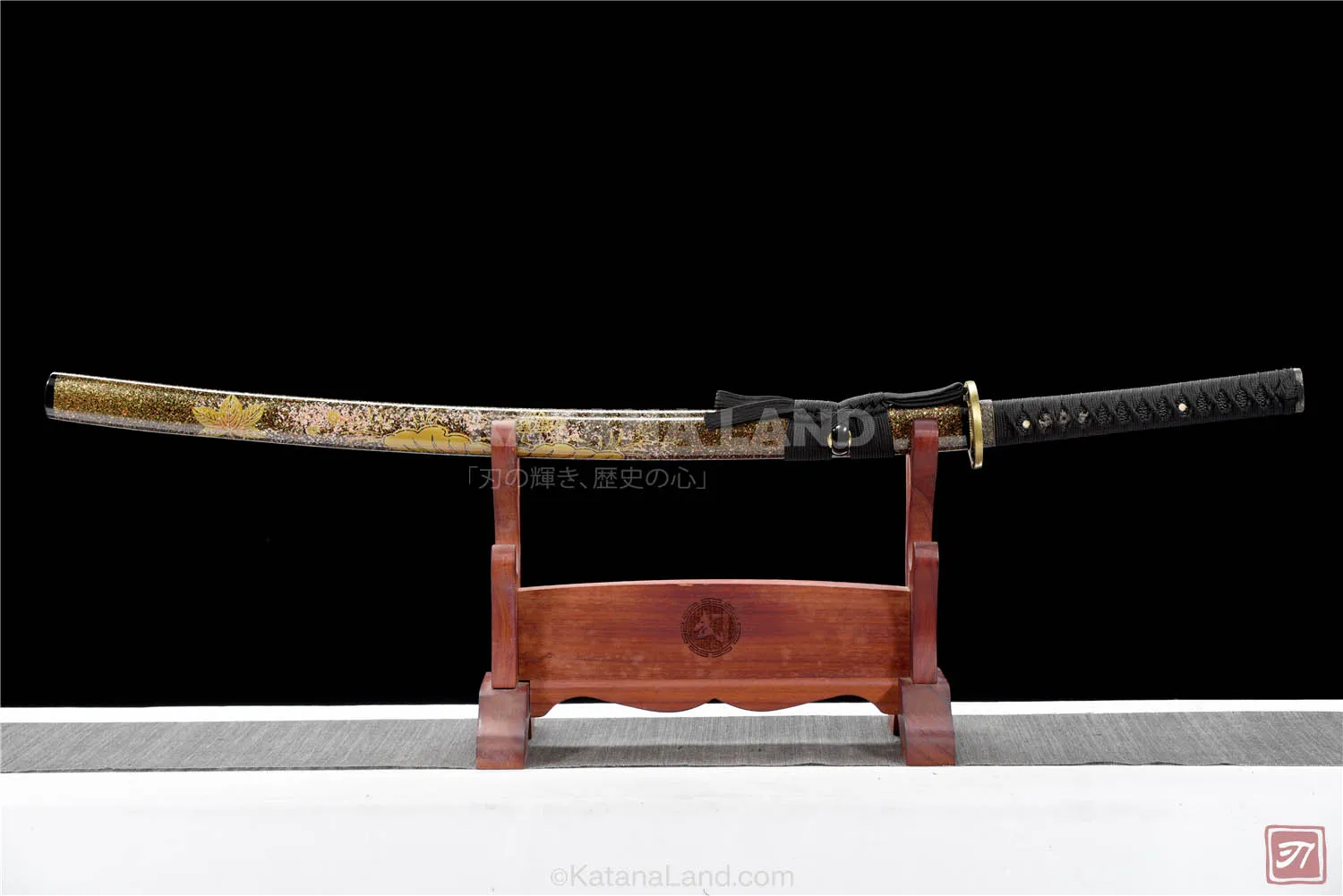
When people picture a “true” katana, they often imagine tamahagane, repeatedly folded and laminated into complex constructions. In that structure, the hardest hagane layers typically run around 1.0 to 1.5 percent carbon while the softer shingane core is lower in carbon, which lets the blade keep a keen edge without being brittle end to end. Modern carbon steels like 1060, 1095, and T10 achieve this same goal through differential hardening. We harden the edge more fully, then allow the spine to remain softer, which produces the signature hamon line you will see on many of our blades and keeps the sword from snapping under stress. For most modern buyers, a good monosteel blade that is heat treated correctly will feel more consistent in performance than an entry‑level “tamahagane style” piece that only imitates the folding visually. That is why we focus on steels such as spring steel, T10, and manganese steel that we can control precisely in hardening for reliable cutting and safe practice.


Spring Steel Katana Blades: Toughness For Training And Display
Spring steel is one of the most forgiving carbon steel families for katana use, which is why we rely on it in several models. These steels are engineered for flex, so they can bend slightly under load during cutting or accidental misuse and then return to true without taking a permanent set.
Spring Steel In Practice: Aozora no Shishi & Ryujin Sabre
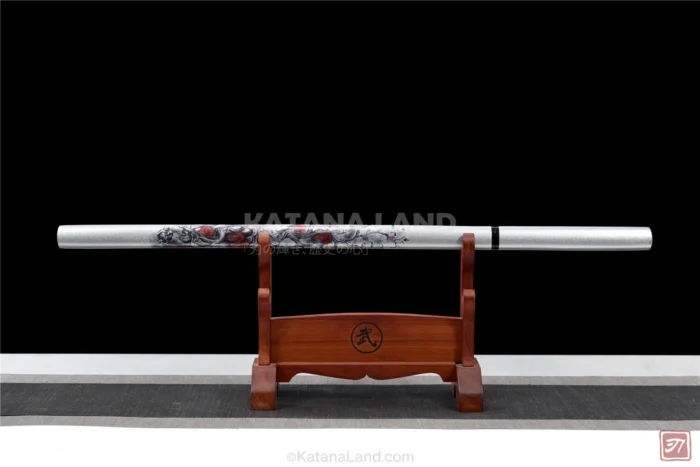
Our Aozora no Shishi Katana uses a spring‑steel blade with a refined silver finish, designed for owners who want a durable cutting‑capable piece that still looks traditional. The dimensions follow classic proportions, with a typical 71 cm blade and roughly 103 cm overall length, and the hamon along the edge visually reinforces the underlying differential hardening style that inspired it. The Ryujin Sabre Katana also uses spring steel but pairs it with a distinctive purple blade and BO‑HI groove for a lighter, more agile feel. At $300.00, Ryujin Sabre gives new practitioners and collectors access to a resilient blade that can handle regular handling and display without the fragility worries of higher carbon, more brittle steels. From a materials standpoint, spring‑steel katanas sit in a sweet spot where functional cutting, maintenance, and price all stay manageable for most buyers. That is why we often recommend spring steel to anyone seeking their first “real” functional katana rather than a wall hanger made from softer low‑carbon steel.
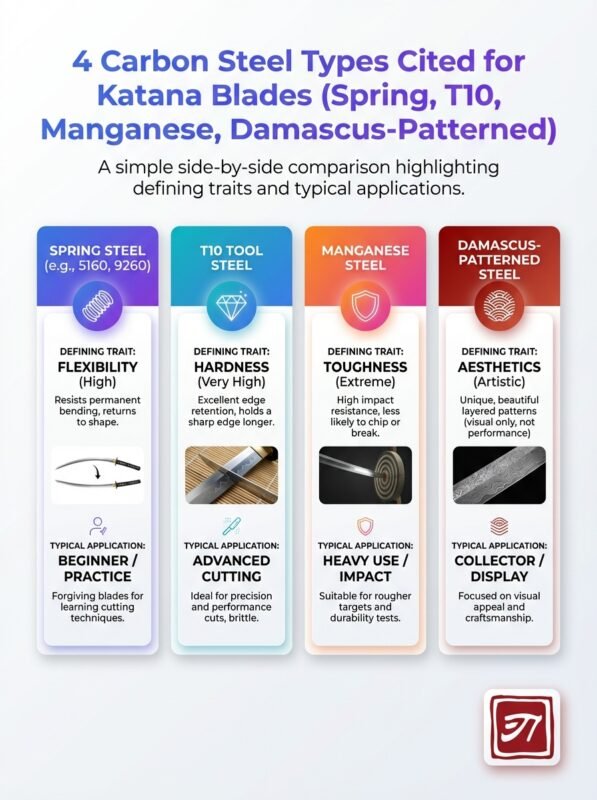
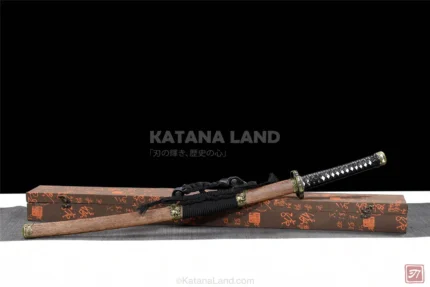
A concise visual guide to four carbon steel options used in katana blades, highlighting Spring, T10, manganese, and Damascus-patterned steels.
T10 Tool Steel: Premium Edge Performance In Modern Katanas
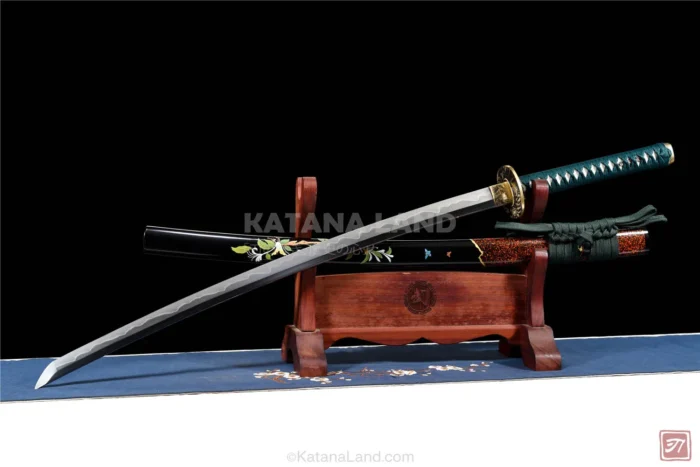
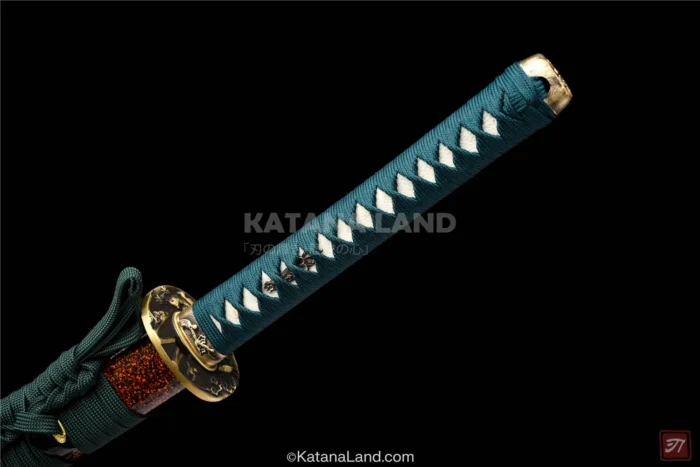
T10 is a tungsten‑alloyed tool steel that behaves similarly to very high‑carbon steel, and we treat it as one of our premium blade materials. When heat treated correctly, T10 blades typically reach around 58 to 60 HRC, which is similar in hardness to 1095 but with a slightly different alloy balance that can help with edge stability. On our site, T10 appears in high‑end variants of models like the Peacock Katana, where the emphasis is on a keen cutting edge, a pronounced hamon, and a refined black aesthetic. The Peacock Katana in its T10 configuration runs about $300.00, combining accessible pricing with a steel choice that serious practitioners often look for when they want harder steel without moving into fully custom territory. Compared to spring steel, a T10 edge will hold sharpness longer but can be less forgiving of bad cuts or hard targets, so we usually steer absolute beginners toward spring or medium‑carbon first. For owners who already understand blade control and maintenance, T10 offers an appealing upgrade path into “enthusiast” territory without moving all the way into rare tool steels.
Did You Know?
T10 tool steel used in premium maru blades has carbon near 1.0%+ and hardness typically in the 58–60 HRC range.
Manganese Steel: High Toughness For Bold Modern Blades
Manganese steel is another carbon‑rich family that we use where we want outstanding impact resistance and a visually bold finish. Rather than chasing maximum edge hardness, manganese steels focus on toughness, which allows us to experiment with strong colors and designs without making the blade excessively brittle.
Examples: Kaze no Shogun, Koketsu no Kumo & Shishi Tachi
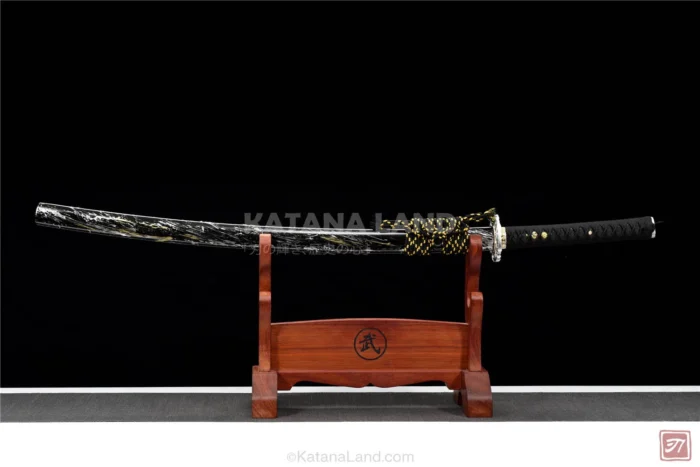
Our Kaze no Shogun Katana pairs a manganese steel blade with a deep black finish and BO‑HI groove, which helps manage weight while keeping the spine robust. At around $350.00, this katana is built for owners who want a functional, modern‑looking blade that can handle regular handling and practice without feeling delicate. The Koketsu no Kumo Wakizashi and Shishi Tachi extend manganese steel into shorter and longer sword forms, maintaining similar durability but adapted to different handling styles and aesthetics. Because of their toughness profile, we see manganese blades as a strong fit for martial artists who prioritize structural integrity and bold presentation over the absolute sharpest possible edge.
Damascus‑Patterned Carbon Steel: Visual Patterns On Functional Blades
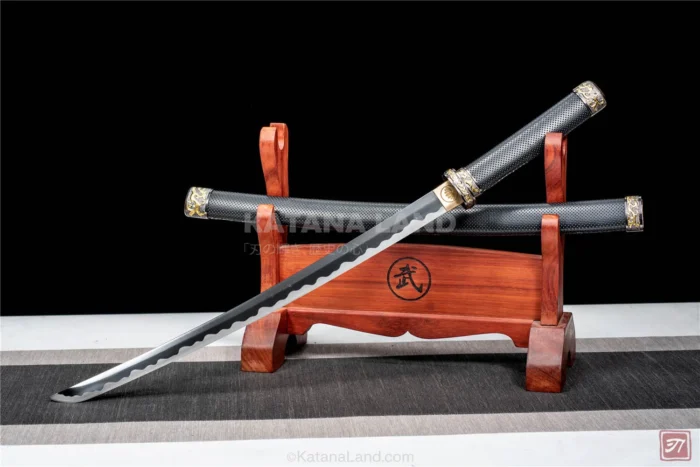
When you see a katana described as Damascus steel, it usually refers to a pattern‑welded or etched pattern on a carbon steel base, not a separate ancient material. The strength still comes from the underlying carbon steel and its heat treatment, while the patterning adds a layered, flowing appearance that many collectors love.
Damascus In Our Tanto And Wakizashi Blades
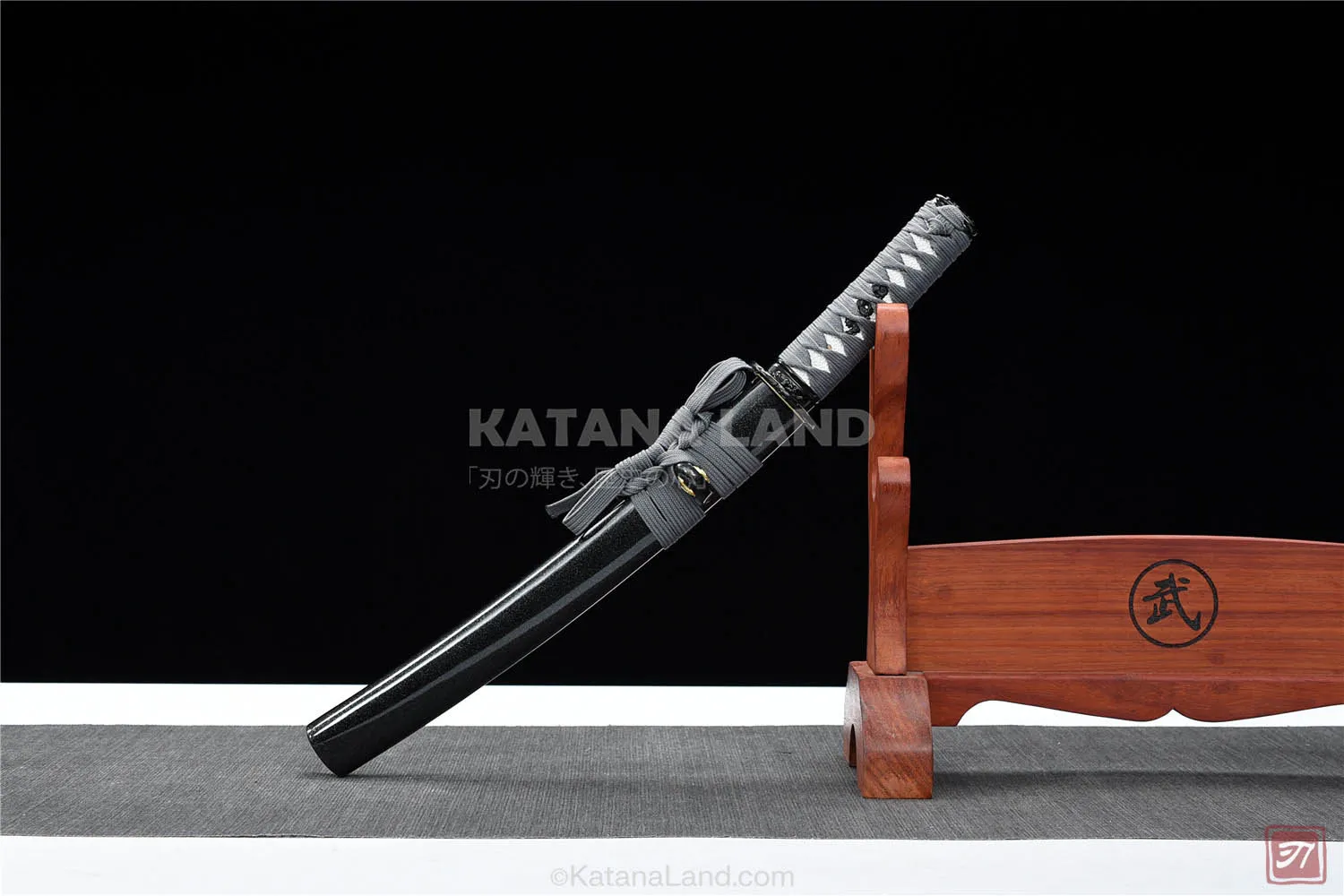
Our Plum Blossom Tanto uses a Damascus‑patterned blade with BO‑HI and hamon styling, compressing katana aesthetics into a compact format around 55 cm total length. Priced around $410.00, it is aimed at collectors and martial artists who want a short blade that still shows off refined patterning and traditional lines. The Dragonscale Shogun Wakizashi extends this Damascus aesthetic into a mid‑length blade, combining intricate patterns with a purple theme and BO‑HI groove. In both cases, we treat these as functional blades with strong visual emphasis, not just decorative pieces, so they share the same careful attention to edge geometry and structural integrity as our plainer blades.
Medium‑Carbon Steels: Balancing Cost, Hardness, And Maintenance
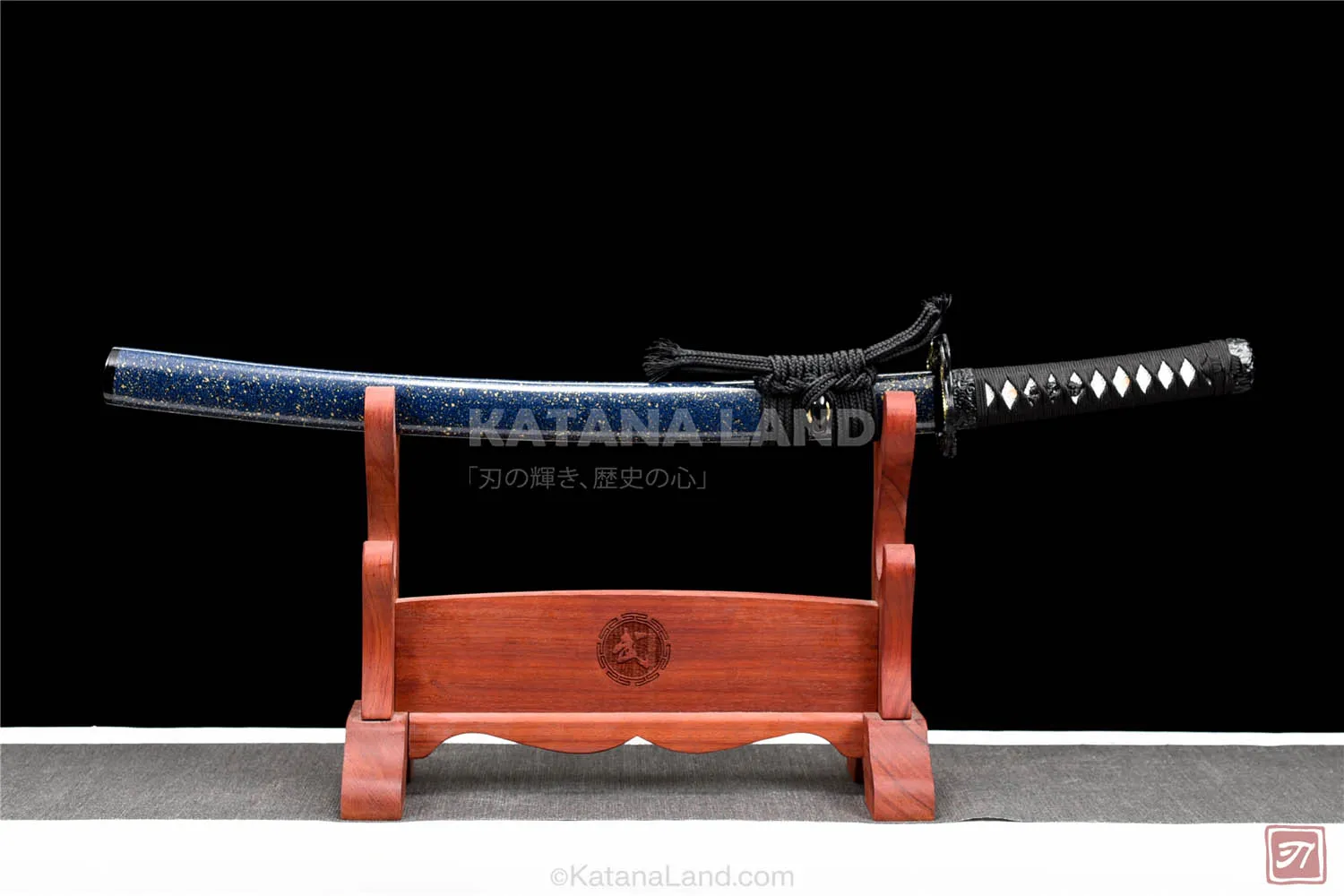
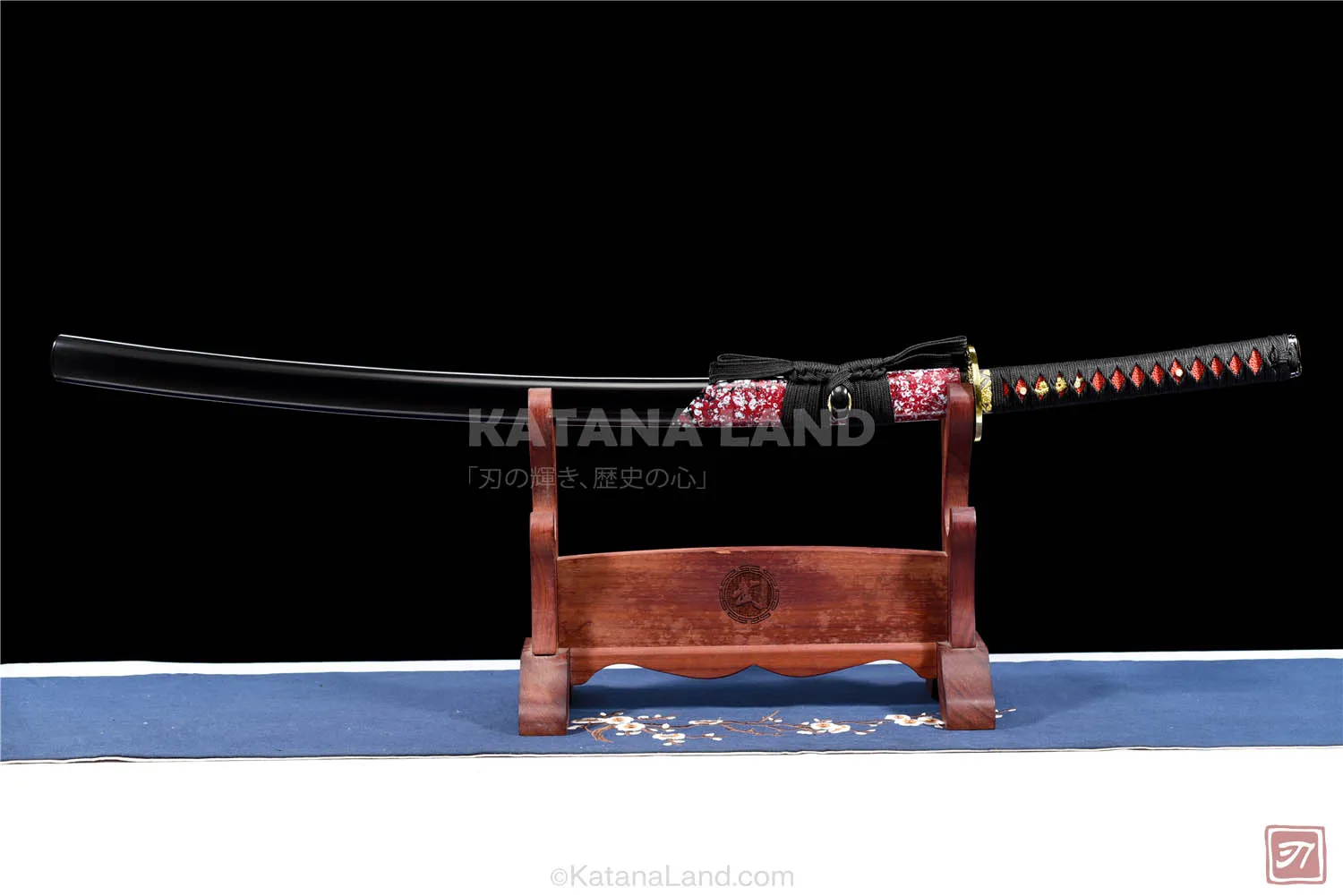
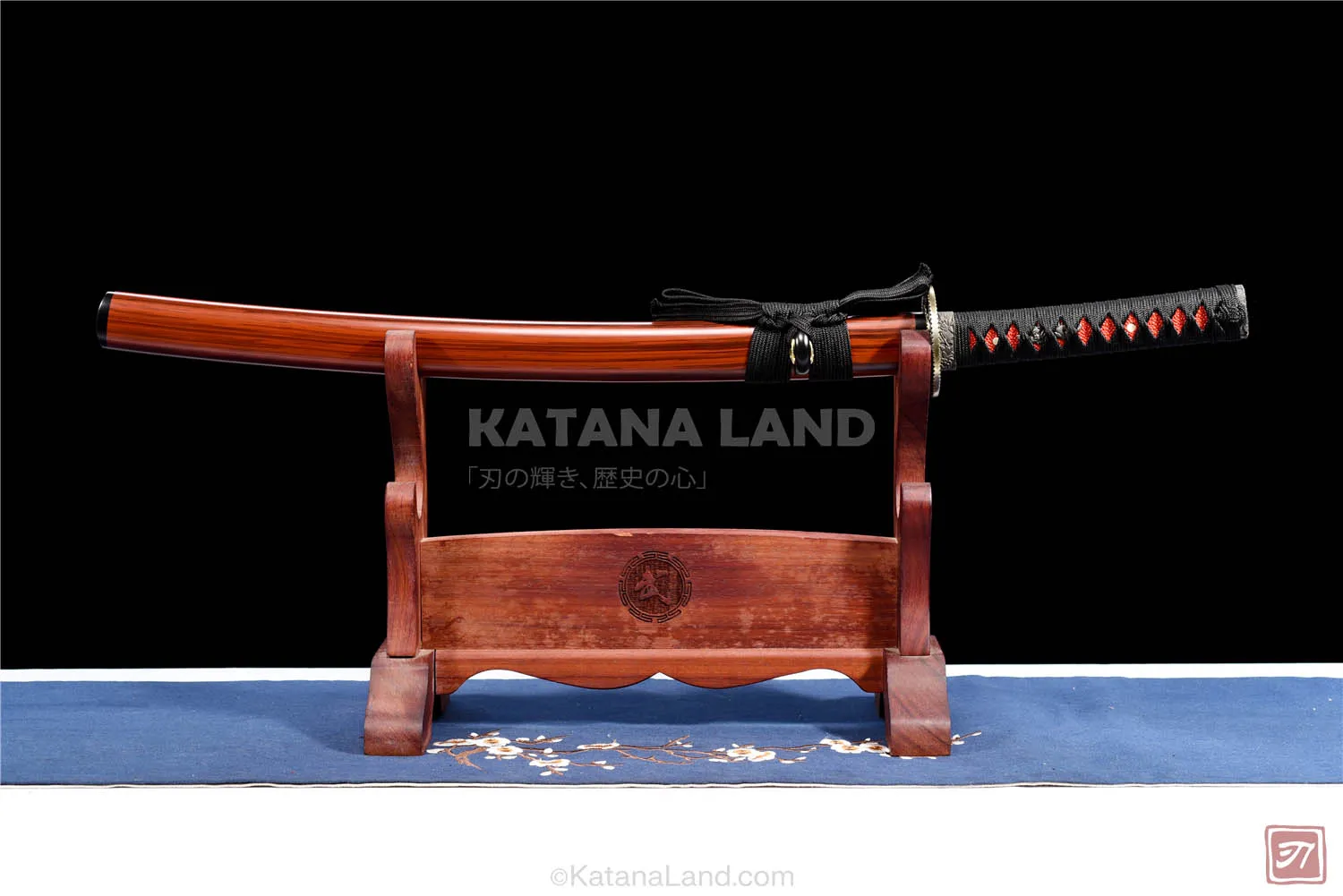
Between softer entry‑level 1045 and very hard steels like 1095 or T10, medium‑carbon steels provide a useful compromise that many owners underestimate. Blades in this range typically reach the high 50s HRC when heat treated, which is enough for solid cutting performance while staying somewhat more forgiving than the hardest options. On our home page you will see examples such as the Akai Hōkō Katana and Akichiku no Tachi, both advertised with medium‑carbon steel blades. We size and finish these swords like our higher‑end models but keep costs down by starting with slightly less extreme steels, which makes them attractive for buyers who want a good performer without moving directly into T10 or fully Damascus‑patterned pieces. Medium‑carbon monosteel is also straightforward to maintain, since it tends to be less prone to micro‑chipping from bad cuts compared to very high‑carbon blades when used by less experienced practitioners. If you are not sure where to start and want a functional sword that feels like a “real” katana without the maintenance demands of ultra‑hard steels, this range is often the most practical choice.
Did You Know?
Traditional tamahagane steel ranges from about 0.5–1.5% carbon; the top-tier hagane can reach 1.0–1.5% carbon.
How Carbon Steel Type Affects Price And Use Cases
Once you understand what each steel is doing, pricing differences across katanas make much more sense. Materials are only one part of the cost, but tougher or harder steels like T10, manganese, and patterned Damascus often require more forging time, finishing, and quality control, so they sit at higher price points. Below is a simple comparison of example blades from our range, each representing a different carbon steel style and purpose.
| Model | Primary Steel Type | Approx. Price | Best For |
| Ryujin Sabre Katana | Spring steel | $300.00 | First functional katana, regular practice |
| Peacock Katana (T10) | T10 tool steel | $300.00 | Enthusiast cutting and collection |
| Kaze no Shogun Katana | Manganese steel | $350.00 | Durable modern‑style functional piece |
| Plum Blossom Tanto | Damascus‑patterned carbon steel | $410.00 | Collectors, short‑blade practice |
If you mainly want a display piece with occasional light cutting, a medium‑carbon or spring‑steel blade can be ideal and budget friendly. If you intend to cut frequently, especially harder targets, a higher‑carbon tool steel like T10 or a very tough manganese alloy gives you more headroom, provided you are comfortable with regular oiling and careful handling.
Steel And Blade Features: BO‑HI, Hamon, And Aesthetics
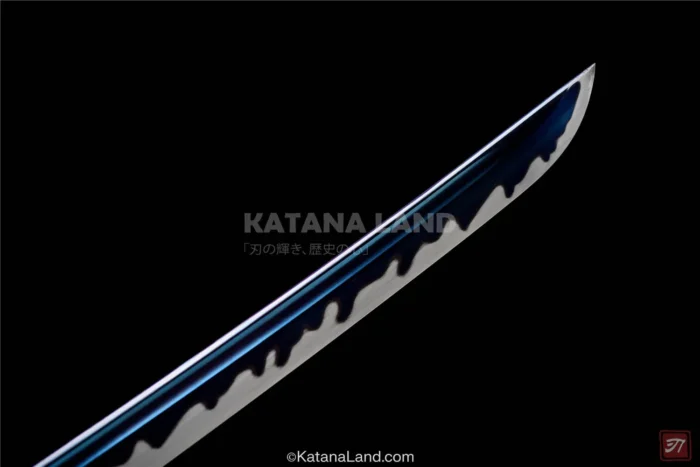
Carbon steel choice interacts closely with blade features like BO‑HI and hamon, so it helps to see them as a system rather than separate decisions. BO‑HI, the groove along the blade, reduces weight and shifts balance, which can pair nicely with tougher steels such as manganese or spring steel where we are comfortable removing some material without compromising safety. We use BO‑HI on pieces like the Ryujin Sabre, Kaze no Shogun, and Shishi Tachi, which all combine strong carbon steels with grooves for a livelier feeling swing. Hamon, the temper line, appears on many of our T10 and spring‑steel blades, where differential hardening or similar finishing techniques highlight the difference between harder edge and softer spine. Patterned Damascus blades add yet another visual layer on top of these features, so a tanto like Plum Blossom can show Damascus patterning, a hamon style, and BO‑HI simultaneously. When we select the steel for a design, we consider how that steel will accept these features, how it will look polished, and how it will behave over years of use.
-
 Shishi Tachi$400.00
 -
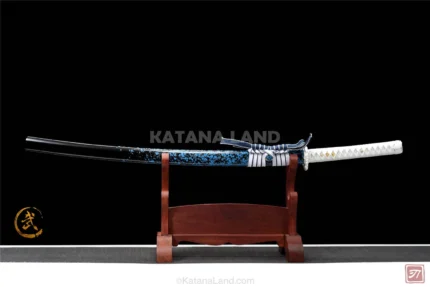 Ryujin Sabre Katana$300.00
 -
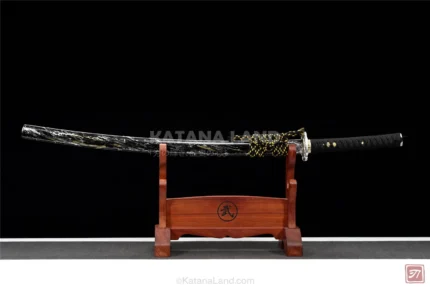 Kaze no Shogun Katana$350.00
Choosing The Right Carbon Steel Type For Your Next Katana
Putting this all together, the “best” carbon steel for a katana depends far more on your experience, intended use, and willingness to maintain the blade than on any single specification. You can think of the main options we use in rough categories that map neatly to different owner profiles.
- Spring steel – ideal for first functional katanas and regular practice, with a forgiving balance of toughness and hardness.
- Medium‑carbon steels – good all‑rounders for owners who want solid performance and moderate maintenance.
- T10 tool steel – suited to enthusiasts who value edge retention and clear hamon, and who already understand blade care.
- Manganese steel – built for toughness and bold aesthetics, a strong match for visually striking training or display swords.
- Damascus‑patterned carbon steel – best for collectors and practitioners who want functional blades with standout patterning.
If you are uncertain, we usually suggest starting with spring steel or medium‑carbon, then moving into T10 or Damascus as you refine your preferences and care routine. Once you know how often you will be cutting, what targets you prefer, and how much time you want to invest in maintenance, matching a specific steel and model becomes much easier.
Conclusion
Every katana we forge starts with a deliberate carbon steel choice, because that decision quietly controls how the blade will feel, cut, and age in your collection. Whether you choose a tough spring‑steel training sword, a crisp‑edged T10 showpiece, a manganese‑steel modern design, or a Damascus‑patterned tanto, understanding the steel type gives you realistic expectations about performance, maintenance, and value. When you are ready to pick your next blade, focus first on how you will actually use it, then match that use case to the carbon steel family that best supports it, and we will take care of the rest in the forge and workshop.