
Walk into any sword shop, or scroll through enough listings online, and you’ll notice something. Sellers love to advertise weight. Heavy blades get described like they’re a selling point, as if more metal automatically means more power. It’s an understandable assumption. But it’s wrong, and if you buy a katana based on weight alone, you’ll probably regret it.
The samurai weren’t lugging around heavy swords. They were carrying precision instruments — light enough to move fast, balanced well enough to control under pressure. Real cutting power has almost nothing to do with how heavy the blade is. Let me explain why.
Cutting Power Isn’t About Mass — It’s About Momentum
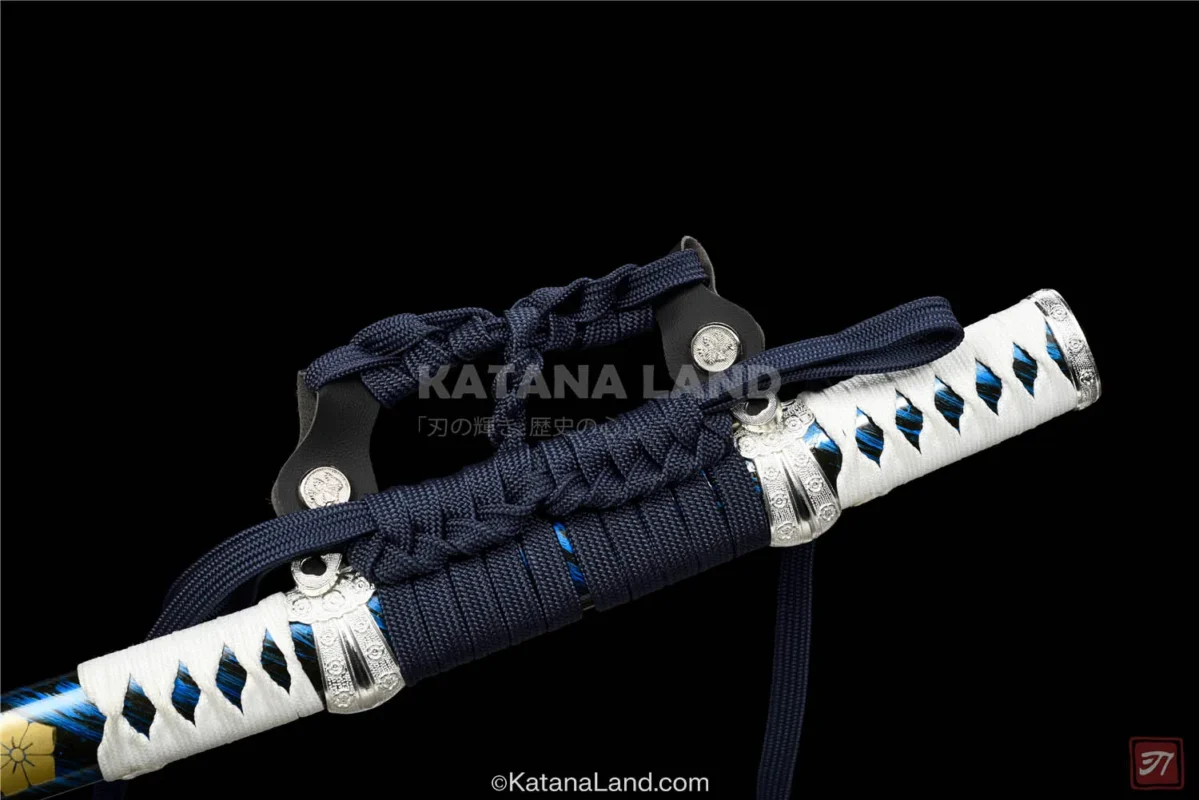
Here’s the simple physics: cutting force comes from mass multiplied by speed, not mass alone. A heavier blade brings more mass to the equation, sure. But if that extra weight slows your swing — and it will — you’ve already given back most of what you gained.
A well-balanced sword accelerates faster. It moves through the cut more cleanly. And because the edge arrives with better alignment and more controlled force, it actually cuts more effectively than a heavier blade swung with less precision and speed.
Think about the difference between swinging a sledgehammer slowly and snapping a well-weighted hatchet through the same target. Speed matters. Efficiency matters. Dead weight, when it doesn’t contribute to the motion, is just dead weight.
Can Katanas Cut Through Anything?
What ‘Balance’ Actually Means
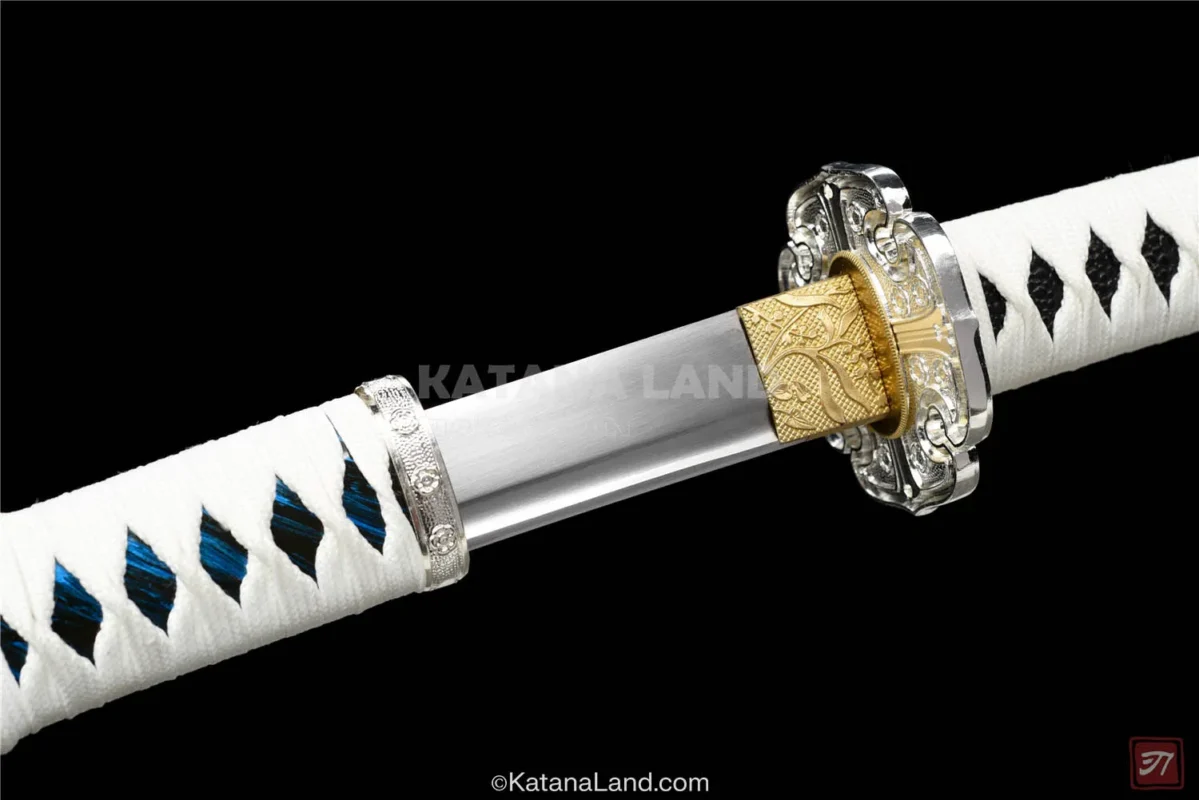
When sword people talk about balance, they’re referring to the Point of Balance (PoB) — the spot where the blade would rest level if you balanced it on one finger. On a well-made katana, that point usually sits somewhere between four and six inches forward of the guard.
That location tells you a lot about how the sword will feel in motion. A balance point closer to the handle gives you quicker, more responsive handling — good for forms, drills, and anything requiring fast transitions. Push that point further toward the tip and the sword develops more momentum through a cut, but it gets harder to redirect and slower to recover.
Neither extreme is wrong. But the balance point has to match how you’re actually going to use the sword. And crucially, a blade that’s just generally heavy — without intentional balance — gives you the downsides of both without the advantages of either.
The Historical Reality of Katana Weight
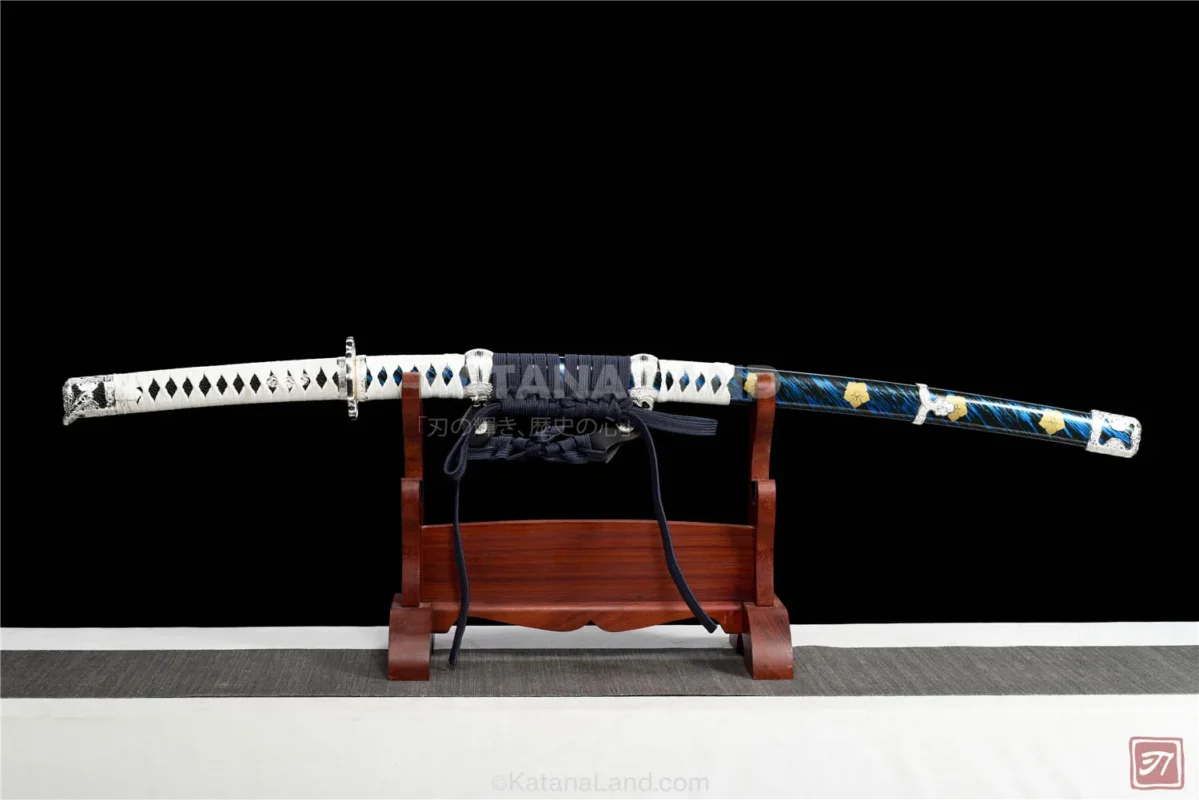
Authentic katanas from feudal Japan typically weighed between 1.1 and 1.4 kilograms — roughly 2.4 to 3.1 pounds. That’s about the weight of a large water bottle. Not exactly an imposing number.
This wasn’t accidental. Samurai fought in conditions where a fraction of a second could decide everything. A sword that made you slow, tired your arm after ten minutes, or resisted quick changes of angle was a liability. Japanese sword makers spent centuries refining blade geometry, taper, and distal thickness — not to maximize weight, but to find the exact balance point where the sword felt like a natural extension of the arm.
If you’re buying a katana because you want something “authentic,” know that historical accuracy actually points toward lighter, not heavier. The heavy katana is largely a modern myth.
The Mistake Most Beginners Make
It’s almost a rite of passage. You’re new, you’re excited, and you’re standing in front of two swords. One is noticeably heavier. Your brain says: this one’s serious. This is the real one.
So you buy the heavy one. And within a few sessions, the problems start. Your swings are slower and harder to control. Your wrist starts aching. Your cuts are inconsistent because you’re fighting the blade instead of guiding it. Technique suffers — and bad habits formed early are genuinely hard to undo.
Heavier swords don’t build strength, they build compensations. Your body learns to muscle through rather than cut with skill. That’s the opposite of what good training is supposed to do.
Weight Still Has a Role — Just Not the One You’d Expect
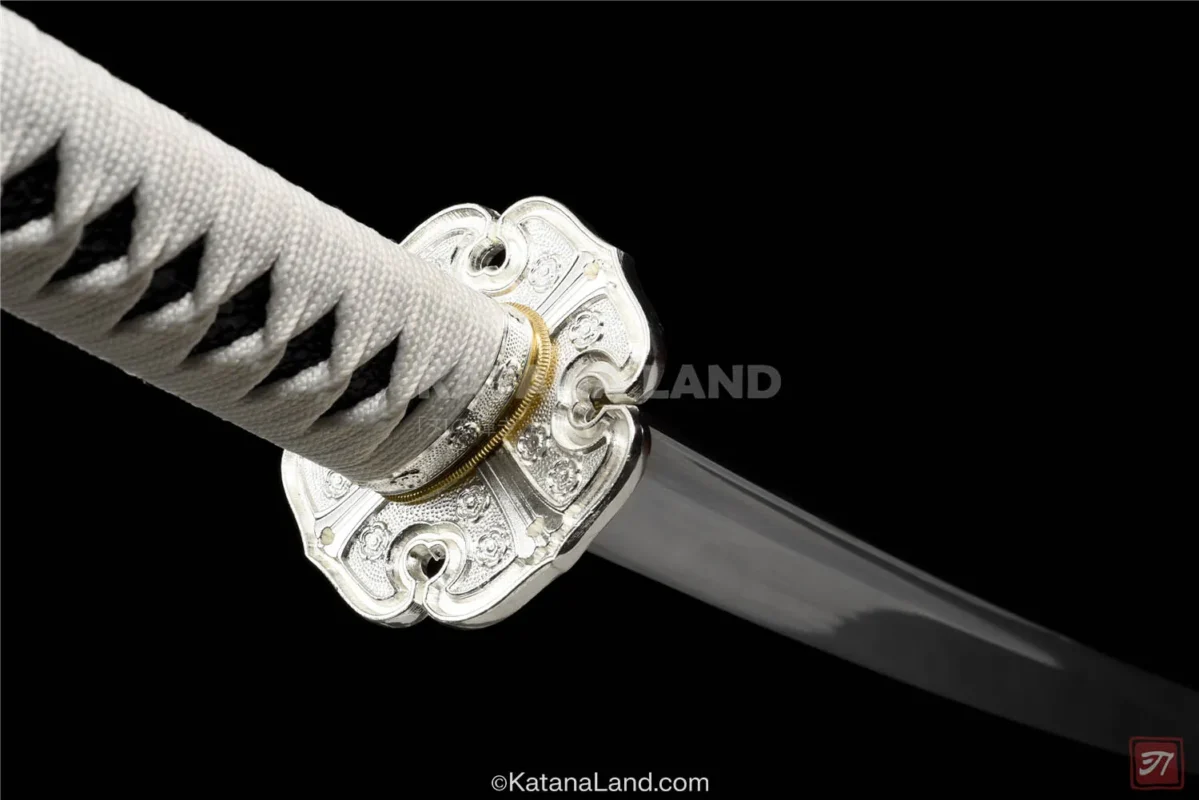
None of this means weight is irrelevant. It just has a much more specific function than people realize.
- For cutting practice (tameshigiri): A touch of forward weight helps carry momentum through the target. Not heavy overall — just deliberately weighted toward the tip.
- For martial arts training: Moderate, well-distributed weight gives you the physical feedback you need without burning you out. You want to feel the sword, not fight it.
- For display: Weight is almost entirely irrelevant. Look at the finish, the fittings, the geometry. Nobody’s swinging it.
The throughline is intentionality. Weight that’s been designed into a sword for a specific purpose is useful. Bulk for the sake of bulk — or because it photographs impressively — is not.
How to Actually Evaluate Balance When You’re Buying
Most sword purchases happen online, which makes hands-on testing difficult. But you can still make a smart assessment.
- Check where the POB is listed: Four to six inches forward of the guard is a reliable starting point for most purposes. Sellers who know their product will list this.
- Look at the blade geometry: A well-tapered blade with proper distal thinning (the thickness reducing toward the tip) will balance better than a blade that’s uniformly thick. This is a sign of quality construction, not just aesthetics.
- Match the length to your body: A longer blade naturally feels heavier and requires more effort to control. Don’t choose a 30-inch blade if a 27-inch would suit your height and arm length better.
- Read reviews from practitioners, not collectors: Someone who trains with the sword will notice handling issues that a display buyer never would.
Matching the Sword to What You’re Actually Going to Do
It sounds obvious, but it’s worth saying plainly: the right sword depends entirely on how you’re going to use it.
- Martial arts training: Go lighter with a balanced, responsive feel. Your arms will thank you at the end of a two-hour session.
- Cutting practice: Look for a balanced sword with slightly forward weight distribution — enough to carry through a target cleanly, not so much that recovery feels labored.
- Collecting: Historical proportions matter. Stick close to the traditional weight range and look for accurate geometry over dramatic presentation.
- Display only: Focus on craftsmanship, finish quality, and appearance. A beautiful sword at 1.5 kg is a better display piece than an ugly one at 1.1 kg.
The Bottom Line
Balance is what makes a katana work. Not weight.
The swords that shaped Japanese martial history were light, precise, and designed around efficiency of movement. They weren’t heavy because heavy was never the point. The point was to move faster than the other person, cut cleanly on the first attempt, and keep your arm from giving out before the fight was over.
When you’re evaluating a katana — whether for training, cutting, or collecting — put the weight spec aside for a moment and ask where the balance point is. Ask about the blade geometry. Ask how it handles. That’s where the real information lives.
A sword that feels right in motion will always outperform one that just looks impressive on paper.
Quick Answers
How heavy should a real katana be?
Historically, between 2.4 and 3.1 lbs (1.1–1.4 kg). Anything noticeably heavier than this is a departure from traditional design, not an upgrade.
Is a heavier sword better for cutting?
No, at least not in any straightforward way. A sword that’s heavy in the wrong places will slow you down and reduce accuracy. What matters is how the weight is distributed and whether the balance point supports clean, accelerating cuts.
What’s a good katana balance point to look for?
Four to six inches in front of the guard is a solid all-purpose target. Closer to the guard gives you more control; further out adds cutting momentum but reduces responsiveness.
Samurai Katana Swords by KatanaLand.com
-
 Akai Hoko Katana$270.00
 -
 Blue Demon Katana$730.00
 -
 Akazome Sakura no Yoto Katana$300.00
 -
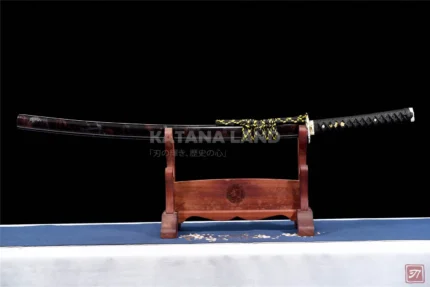 Aoi Yurei Katana$240.00
 -
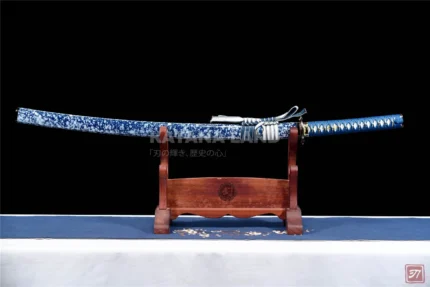 Aoi Kinsuke Katana$360.00
 -
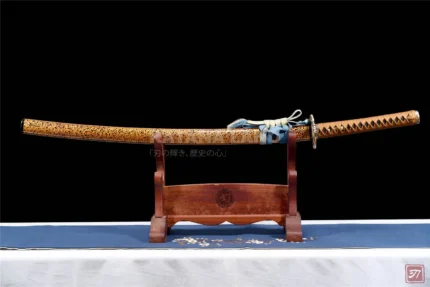 Aoshi Kyuchoten Katana$730.00
 -
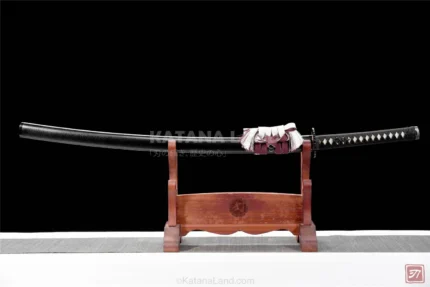 Akaketsu Shou Katana$740.00
 -
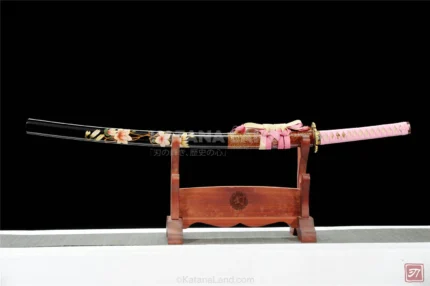 Togenkyo no Tachi$880.00
 -
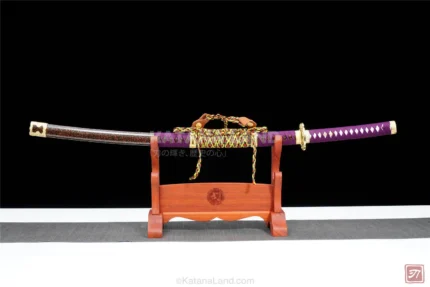 Murasaki Kawa Tachi$410.00
 -
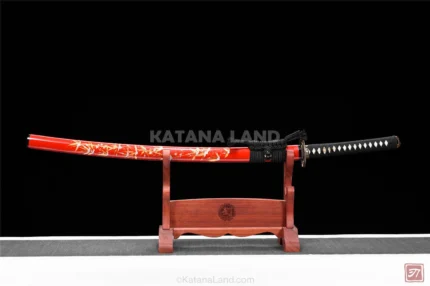 Bamboo Harmony Katana$1,240.00
 -
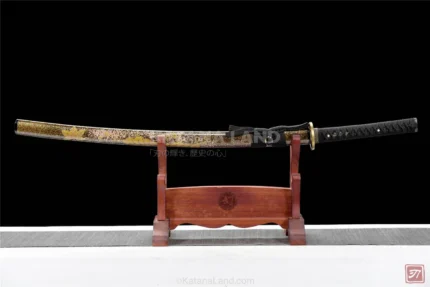 Agarwood Katana$300.00
 -
 Sakura Tachika$570.00